Automotive Engineering · Engines, chassis and motion

Automotive Engineering

The engineering of the road: engines and motors, gearboxes, suspension, brakes and crash structures, and the century-old contest between power, weight, safety and cost. Wear it on button-ups and socks, with a mechanical engineering tie to match.

Behind this page an engine comes apart as you scroll and goes back together: a 2.0-liter inline-four with two overhead camshafts and 16 valves (bore and stroke 86 mm, 1,998 cc). Each part leaves along the line it is assembled on: the cam cover, the camshafts, the valves and the cylinder head lift off, the pistons rise out of their bores, the crankshaft and the oil pan drop, the intake and exhaust manifolds pull away to either side, the timing chain comes forward and the flywheel back. By the middle of the page the engine is fully exploded; by the end it is whole again. A diagram follows each cylinder through the four strokes, intake, compression, power and exhaust, over the 720 degrees of crank rotation in a cycle, firing in the order 1-3-4-2, with the camshafts turning at half the crank’s speed; a tachometer climbs from an 850 rpm idle to the 6,500 rpm redline. The pictures are illustrations; the timing is computed.

Why it matters

Heard that misfire from the curb? So did we.

Automotive engineering is the business of building a machine that carries people safely at speed, for years, at a price they can pay. Karl Benz patented his three-wheeled Motorwagen in January 1886. In August 1888 Bertha Benz drove one about a hundred kilometers from Mannheim to Pforzheim with her two sons, buying fuel from a pharmacy on the way and fixing faults as they arose. In 1959 Volvo fitted Nils Bohlin’s three-point seat belt as standard, and left the design free for any maker to use.

Automotive engineers chase grams and fractions of a decibel. The work means winter testing near the Arctic Circle and summer testing in the desert, dynamometer runs, wind-tunnel sessions, and crash tests that crumple a prototype in about a tenth of a second. Engineers argue over torque curves and suspension geometry, noise-and-vibration specialists spend weeks hunting a single rattle, and battery teams now fight heat as hard as engine teams ever did. Behind every model year sits a launch date that does not move, and a team that met it anyway.

WIDE OPEN THROTTLE

Four strokes, two turns, one spark, all at full load.

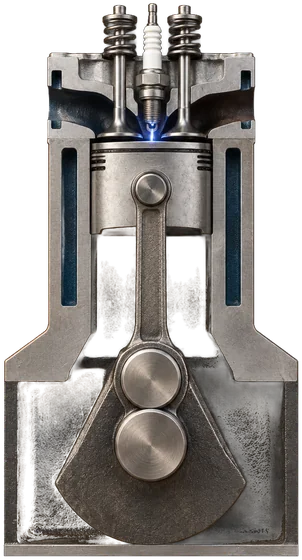
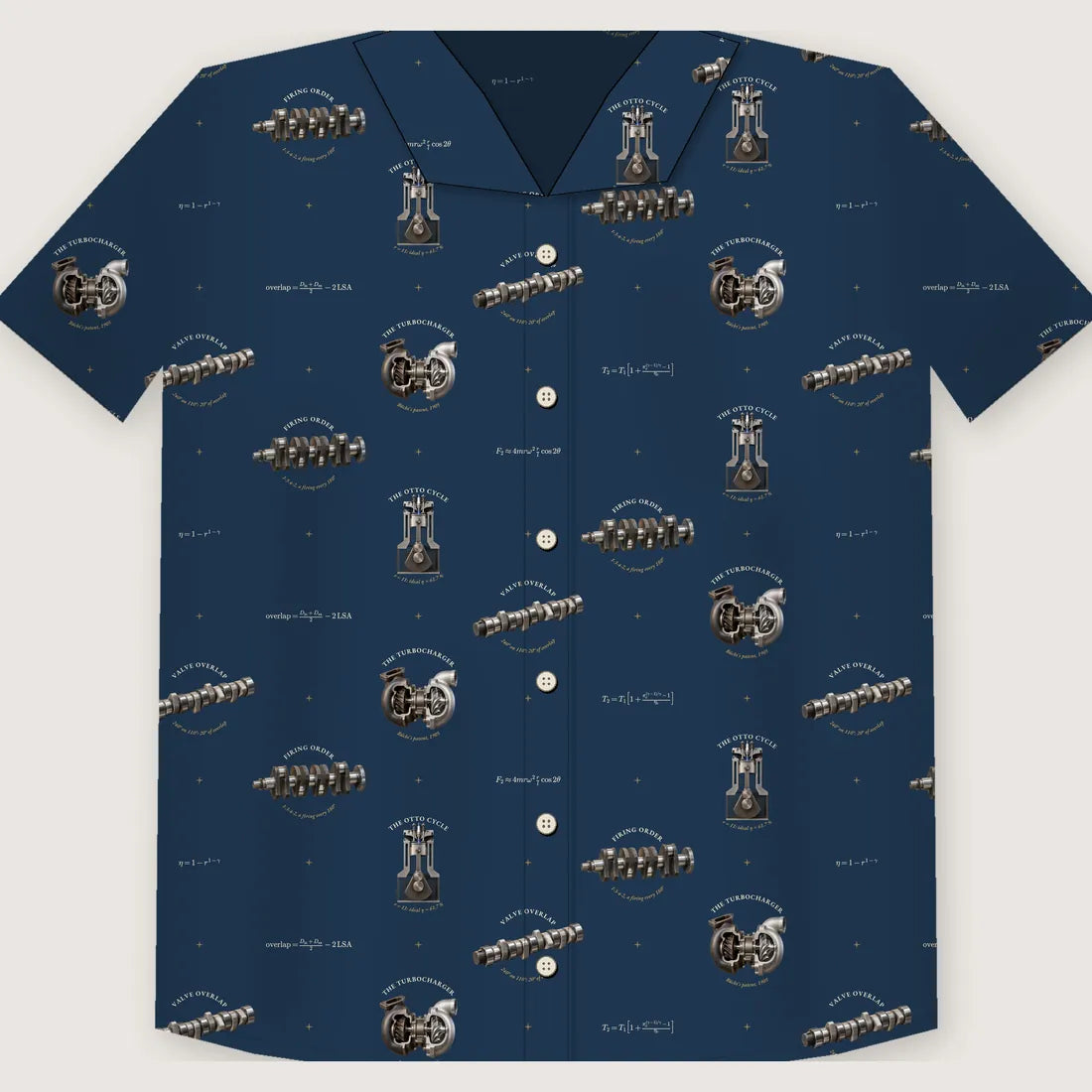
The engine at its loudest. Intake, compression, power, exhaust: four strokes, two crankshaft turns, and in the ideal air-standard cycle the efficiency depends on the compression ratio alone, η = 1 − r1−γ, 61.7 percent at the page’s reference ratio of 11. The camshaft turns once for every two crankshaft turns and decides when each cylinder breathes: a 240-degree cam ground on 110-degree lobe centers holds both valves open for 20 degrees around top dead center.

The flat-plane crank of an inline-four puts cylinders 1 and 4 together, opposite 2 and 3, firing 1-3-4-2, once every 180 degrees; the primary forces cancel and a second-order shake remains, 10.1 kN at 6,000 rpm in the example. And the turbocharger, patented in 1905, spins its compressor on the exhaust’s waste energy, a 50 mm wheel near 119,000 rpm. Anyone who has held an engine on the limiter on a dyno will read the name first.

  • The Otto CycleOne cylinder sectioned at top dead center: piston at the top, both valves shut, one spark at the plug.
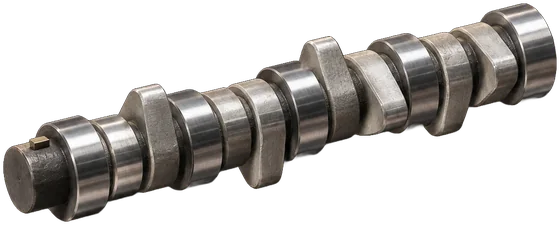
  • Valve OverlapA forged camshaft for an inline-four: five journals and eight lobes, their noses at the computed angles.
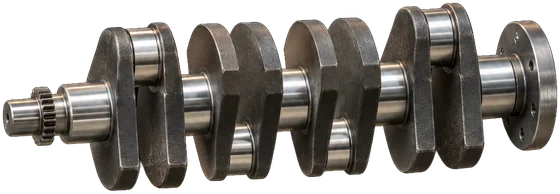
  • Firing OrderA flat-plane inline-four crankshaft, pins 1 and 4 on top, 2 and 3 below, each web with its counterweight.
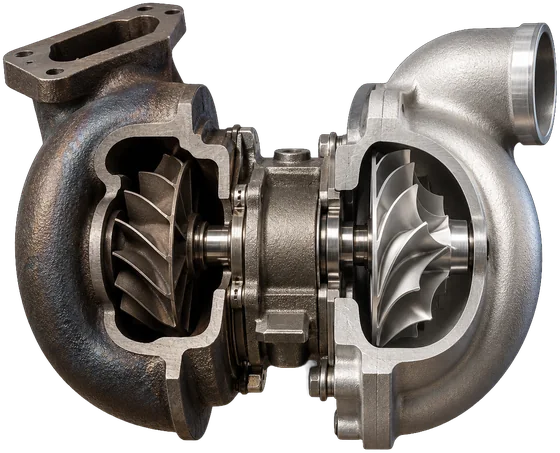
  • The TurbochargerA cutaway turbocharger: cast-iron turbine housing on the left, aluminum compressor on the right, one shaft.
Tell me when it’s ready

Leave your email and we’ll write the day it’s ready.
HEEL AND TOE

Four ways to match speeds between the engine and the road.

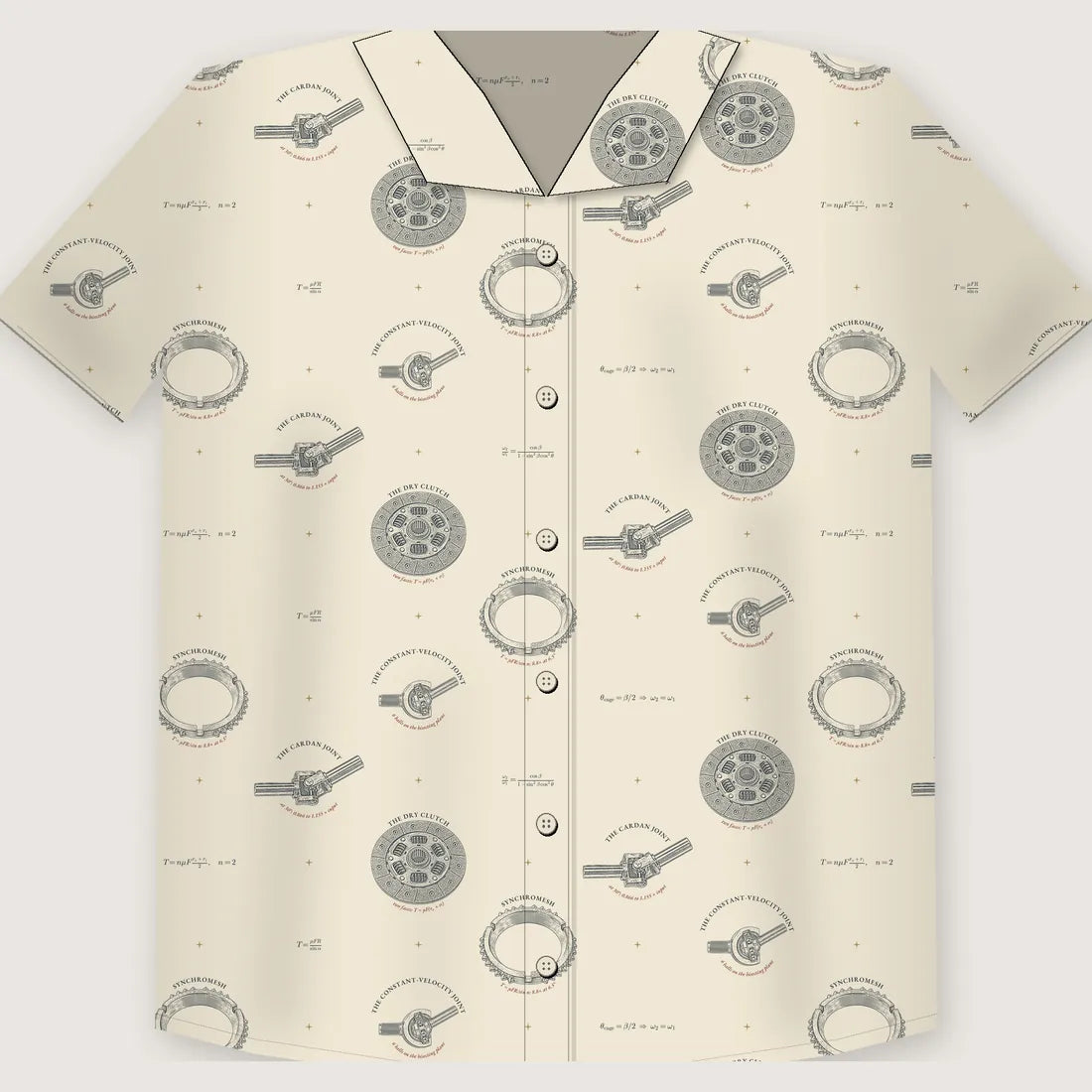
Heel-and-toe is matching engine speed to road speed with both feet; here are four machines that do it for you, or cannot. A dry clutch matches the speeds by slipping, and pays in heat exactly the kinetic energy it delivers: on two faces it carries T = μF(ro + ri), 300 N·m for 5 kN of clamp at μ = 0.3 on facings from 80 to 120 mm radius. The synchronizer does it with a brass cone: friction on a cone of half-angle 6.5 degrees is 8.8 times a flat face’s, and its chamfered teeth block the sleeve until the speeds agree.

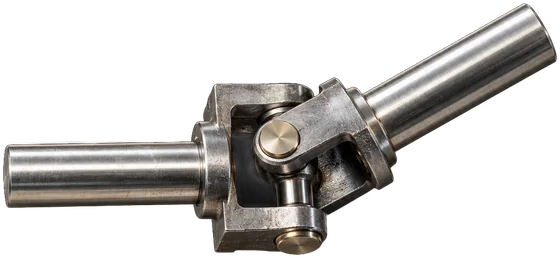
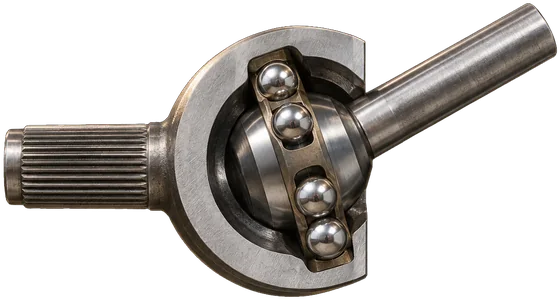
A Cardan joint turns a corner but not at a steady speed: at 30 degrees its output runs between 0.866 and 1.155 times the input, twice a turn. The ball-type constant-velocity joint of 1928 carries the torque on six balls whose cage keeps every ball on the plane that bisects the two shafts, so both turn at exactly the same speed. Driveline engineers, and everyone who learned on a stick shift, will know the name.

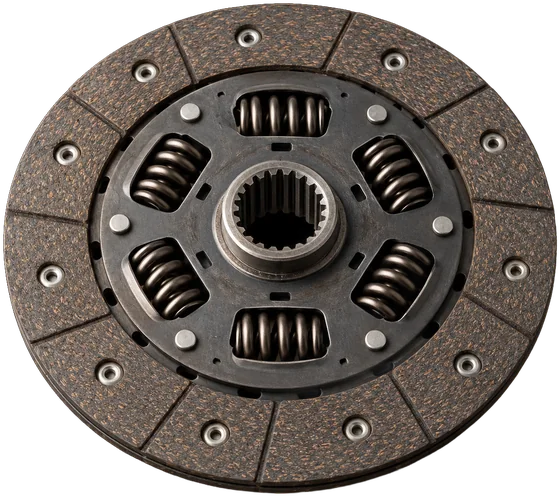
  • The Dry ClutchA clutch driven disc: two woven friction facings and six coil springs around a splined hub.
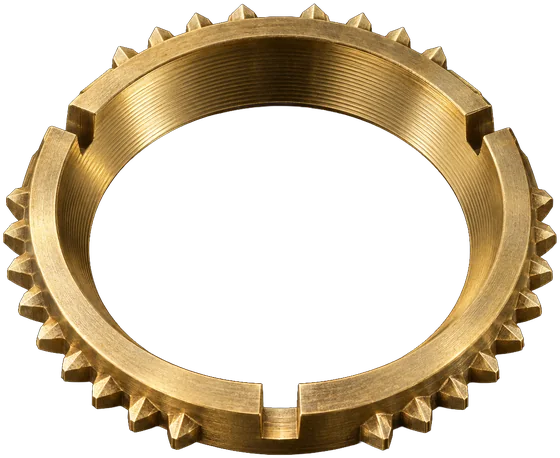
  • SynchromeshA brass blocker ring with roof-chamfered teeth, three notches and a finely grooved inner cone.
  • The Cardan JointA polished steel Cardan joint, a cross in two yokes, its shafts meeting at 30 degrees.
  • The Constant-Velocity JointA sectioned ball joint: four of its six balls in one straight line on the bisecting plane.
Tell me when it’s ready

Leave your email and we’ll write the day it’s ready.
Socks mix and match across every field: three pairs for $69, and two ship free in the U.S.

Crew socks · One size

Crew socks

A field of your own, from cuff to toe.

  • The pattern
  • The previewA studio mockup; photos of the finished pair are on the way.
Shop now · Regular price $26 Sale price $23.40

Leave your email and we’ll write the day this pair is ready.

Necktie · 3.5 in wide

Subject ties

A formal introduction to your field.

  • The color
  • The previewStudio render of the tie. Zoom shows the print up close.
Shop now · Regular price $36 Sale price $32.40

Leave your email and we’ll write the day this tie is ready.

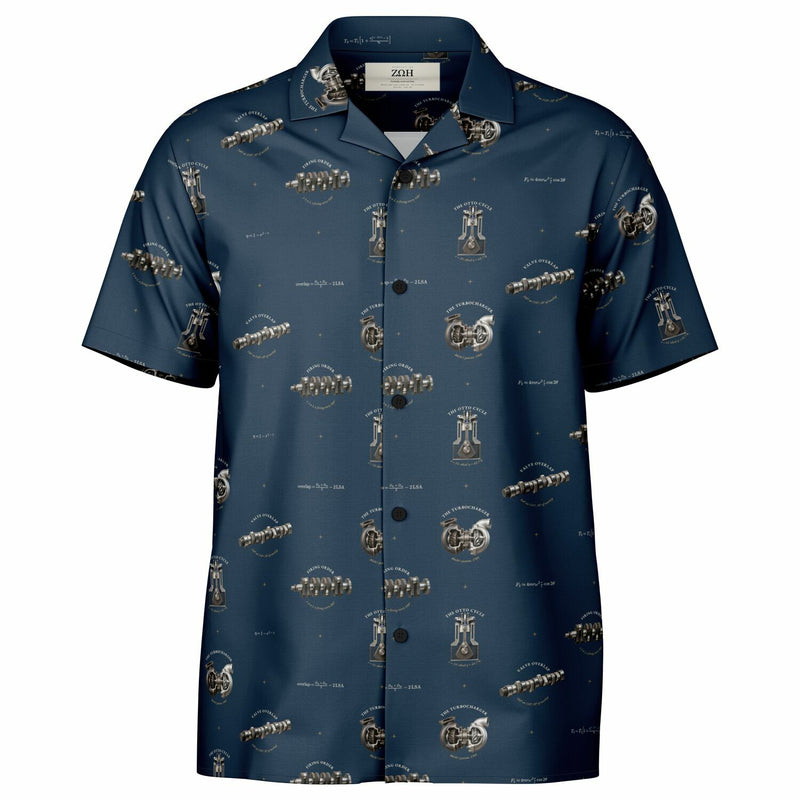
The science on the shirt

What you’re wearing

Every object on the shirts, and the science behind it.

Valve Overlap

WIDE OPEN THROTTLE

Valve Overlap

240° on 110°: 20° of overlap

The camshaft turns once for every two crankshaft turns and opens each valve once a cycle. A cam called 240 on a 110 holds each valve open for 240° of crank rotation, its lobe centers 110 cam degrees apart, so around top dead center both valves are open for 240 − 220 = 20°; at speed the departing exhaust draws the fresh charge in.

Firing Order

WIDE OPEN THROTTLE

Firing Order

1-3-4-2, a firing every 180°

An inline-four fires every 720°/4 = 180°. Its flat-plane crankshaft puts the pins of cylinders 1 and 4 together, opposite 2 and 3, and the order 1-3-4-2 runs all four strokes at once. Primary forces cancel; second-order forces add, shaking the block at twice crank speed: 10.1 kN at 6,000 rpm with 0.5 kg reciprocating per cylinder.

The Turbocharger

WIDE OPEN THROTTLE

The Turbocharger

Büchi’s patent, 1905

An exhaust-driven turbine spins a compressor on the same shaft; Alfred Büchi patented the idea in Switzerland in November 1905. Compression heats the air: at pressure ratio 2 and 75 percent efficiency, 25 °C air leaves at 112 °C, only 1.55 times denser; an intercooler back to 40 °C makes it 1.90. A 50 mm wheel turns near 119,000 rpm.

The Dry Clutch

HEEL AND TOE

The Dry Clutch

two faces: T = μF(rₒ + rᵢ)

A diaphragm spring clamps one friction disc between flywheel and pressure plate, and it drives on both faces. Worn in, its capacity is T = nμF(rₒ + rᵢ)/2 with n = 2: 300 N·m for μ = 0.3, 5 kN of clamp and facings from 80 to 120 mm. Slipping, it turns into heat exactly the kinetic energy it delivers.

Synchromesh

HEEL AND TOE

Synchromesh

T = μFR/sin α: 8.8× at 6.5°

A gear engages only when the sliding sleeve turns at the gear’s speed. The sleeve presses a brass blocker ring onto a cone on the gear; friction on a cone of half-angle α gives T = μFR/sin α, 8.8 times a flat face at 6.5°. The ring’s chamfered teeth hold the sleeve back until the speeds match.

The Cardan Joint

HEEL AND TOE

The Cardan Joint

at 30°: 0.866 to 1.155 × input

A cross whose four arms ride in two yokes lets one shaft drive another at an angle, but not at a steady speed: tan φ₂ = tan φ₁/cos β, so at 30° the output swings between 0.866 and 1.155 of the input, twice a turn. Two joints phased together cancel exactly, which is why a driveshaft has one at each end.

The Constant-Velocity Joint

HEEL AND TOE

The Constant-Velocity Joint

6 balls on the bisecting plane

A driven front wheel is steered and sprung while it turns. The Rzeppa joint (US patent 1,665,280, 1928) carries the torque on six balls between an inner race and an outer bell, held by a cage the grooves steer to half the joint angle, so every ball sits on the bisecting plane and both shafts turn at exactly the same speed.

The big ideas

What people in automotive engineering carry around

The Otto Cycle

The Otto Cycle

Intake, compression, power, exhaust: the four-stroke cycle of Nicolaus Otto’s 1876 engine. Efficiency rises with compression ratio.

The Differential

Lets the outside wheel turn faster than the inside one through a corner while both are still driven.

Ackermann Steering Geometry

Turns the inner front wheel more sharply than the outer, so both roll around a common center instead of scrubbing.

Crumple Zones

Béla Barényi’s idea, first in production on the 1959 Mercedes-Benz W111: the ends crumple so the occupants slow more gently.

Regenerative Braking

The motor runs as a generator, slowing the car and returning energy to the battery instead of heating the brake discs.

Aerodynamic Drag

Drag grows with the square of speed, so the power to overcome it grows with the cube. At highway speed, shape dominates.

Shop Automotive Engineering: Wear it to work

Made to order for you · free U.S. shipping on $46+ (shirts, ties and socks) · 10% off through 30 Nov

More Automotive Engineering designs are on the way.

Leave your email and we’ll write the day they’re ready.