Engineering · Making it work, safely
Engineering
Science turned into bridges, machines, circuits and water supplies that work on day one, keep working for decades, and ideally come in on budget.
Behind this page a pen plotter draws a seven-sheet engineering drawing set on blueprint paper as you scroll, each sheet in drafting order: border, title block, views, hidden lines, center lines, dimensions, notes, with ISO 128 line types and third-angle projection. Sheet 1 holds the drawing index and six typical details, one per big idea: a stress-strength interference plot (factor of safety 2.0, failure probability 3.2 in 100,000, a model), a beam’s free-body diagram (8 and 4 kN reactions), a steel’s stress-strain line (E 200 GPa), Shigley’s S-N line (endurance limit 200 MPa), a feedback loop’s step response (16.3 % overshoot) and two FMEA rows. Then one sheet per branch: a Sallen–Key low-pass filter (1.023 kHz), Watt’s straight-line linkage (0.28 mm off straight over an 80 mm stroke), a Pratt truss with its member forces, a treatment-train process flow diagram with its water balance, a nozzle designed by the method of characteristics, and a double-wishbone suspension’s instant and roll centers (roll center 97 mm high). At the end the whole set lies on the table.
Why it matters
First question: what happens when it fails?
It is the art of doing that well with one dollar, which any bungler can do with two after a fashion.Arthur M. Wellington, on engineering, 1887
Engineering is science with a deadline, a budget and people’s lives depending on it. It learns from success and even more from failure: on 7 November 1940 the Tacoma Narrows Bridge twisted itself apart in a moderate wind, and aeroelastic flutter joined every bridge designer’s checklist. It also has its quiet heroes. When Washington Roebling was left bedridden by caisson disease, Emily Warren Roebling learned the mathematics of cables and stresses, carried his instructions to the Brooklyn Bridge site, and in 1883 was the first to cross it.
Working in it means calculations that somebody else checks, drawings with revision letters, and a standard for almost everything. It means site visits in boots and a hi-vis vest, tolerance stack-ups, and learning that the drawing is not the part. Engineers live among trade-offs between cost, weight, time and risk, and know that “good enough” is a specification, not a shrug. Then there is the moment of signing: a PE’s stamp on a drawing is a promise that the numbers were done properly, and everyone in the room knows it.
Shop Engineering: One from every branch of engineering
Made to order for you · free U.S. shipping on $46+ (shirts, ties and socks) · 10% off through 30 Nov
 Circuit Atlas Button-Up
Short-sleeve button-up · XS–4XL · 3 styles
 Working Parts Button-Up
Short-sleeve button-up · XS–4XL · 3 styles
 The Built Environment Button-Up
Short-sleeve button-up · XS–4XL · 3 styles
 Planetary Systems Button-Up
Short-sleeve button-up · XS–4XL · 3 styles
 Total Reflux Button-Up · Midnight
Short-sleeve button-up · XS–4XL

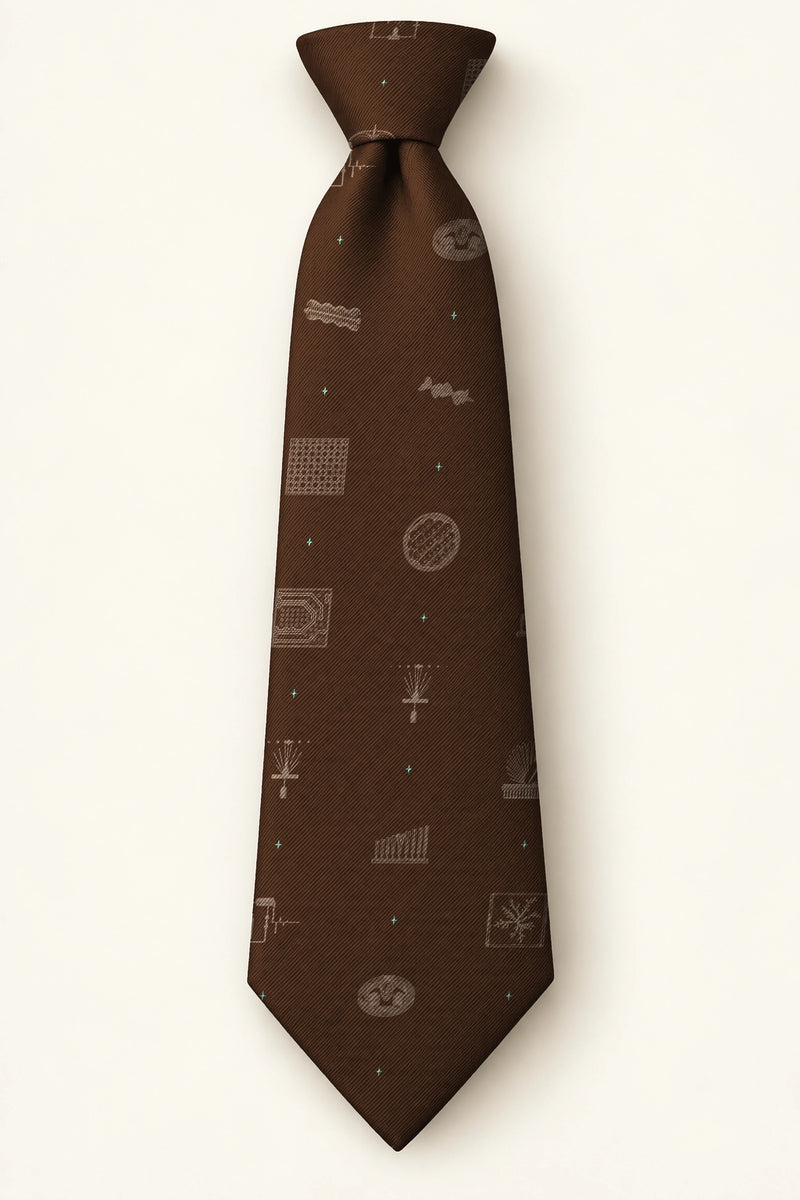

More Engineering designs are on the way.
Leave your email and we’ll write the day they’re ready.
The big ideas
What people in engineering carry around
Factor of Safety
Design for loads well beyond those expected, because materials vary, loads surprise and every calculation simplifies something.
The Free-Body Diagram
Isolate the part, draw every force acting on it, and the problem usually becomes solvable. Engineering’s first move.
Stress and Strain
Force per area, and fractional stretch. In the elastic range their ratio is Young’s modulus, a material’s stiffness in one number.
Metal Fatigue
Repeated loads well below breaking stress can still grow cracks. The de Havilland Comet crashes of 1954 made it everyone’s business.
Feedback Control
Measure the output, compare it with the target, correct. From Watt’s governor to autopilots, keeping the loop stable is the hard part.
Failure Mode and Effects Analysis
List every way each part could fail and what would follow. Tedious, systematic, and a big reason good systems fail gracefully.
Timeline
Who came before
97–98
Sextus Julius Frontinus
c. 35 – 103/4
Named Rome’s water commissioner; De aquaeductu, his account of the city’s aqueducts
Environmental Engineering, for Sextus Julius Frontinus1206
Ismail al-Jazari
d. 1206
The Book of Knowledge of Ingenious Mechanical Devices: clocks, automata, water-raising machines
Mechanical Engineering, for Ismail al-Jazari1420–36
Filippo Brunelleschi
1377–1446
The dome of Florence Cathedral, built without centering
Civil Engineering, for Filippo Brunelleschi1586
Simon Stevin
1548–1620
De Beghinselen der Weeghconst: equilibrium on inclined planes, from a wreath of spheres
Classical Mechanics, for Simon Stevin1678
Robert Hooke
1635–1703
Lectures de Potentia Restitutiva: “ut tensio, sic vis,” force proportional to extension
Mechanical Engineering, for Robert Hooke1759
John Smeaton
1724–1792
The Eddystone Lighthouse: dovetailed granite and Portland stone, set in hydraulic lime
Civil Engineering, for John Smeaton1769
James Watt
1736–1819
Patent No. 913: steam condensed in a separate vessel, the cylinder kept hot
Mechanical Engineering, for James Watt1824
Sadi Carnot
1796–1832
Réflexions sur la puissance motrice du feu: ideal efficiency set by two temperatures alone
Mechanical Engineering, for Sadi Carnot1843
Isambard Kingdom Brunel
1806–1859
SS Great Britain launched at Bristol: an iron-hulled, screw-propelled ocean steamship
Mechanical Engineering, for Isambard Kingdom Brunel1856
Henry Bessemer
1813–1898
The Bessemer process: air blown through molten pig iron, making steel without fuel
Civil Engineering, for Henry Bessemer1865
Joseph Bazalgette
1819–1891
Crossness Pumping Station opens at the southern outfall of London’s new sewers
Environmental Engineering, for Joseph Bazalgette1868
James Clerk Maxwell
1831–1879
On Governors: the stability of feedback control, analyzed mathematically
Electrical Engineering, for James Clerk Maxwell1870
August Wöhler
1819–1914
Railway-axle fatigue tests: repeated loads far below the breaking strength cause fracture
Mechanical Engineering, for August Wöhler1887
Ellen Swallow Richards
1842–1911
Official water analyst for the Massachusetts survey of inland waters
Environmental Engineering, for Ellen Swallow Richards1888
Nikola Tesla
1856–1943
US patent 381,968 and others: AC motors driven by a rotating magnetic field
Electrical Engineering, for Nikola Tesla1925
Edith Clarke
1883–1959
US patent 1,552,113: a graphical calculator for long power-transmission lines
Electrical Engineering, for Edith Clarke1926
Robert H. Goddard
1882–1945
A rocket burning gasoline and liquid oxygen flies at Auburn, Massachusetts
Rocket Science, for Robert H. Goddard
Neighboring fields
Wander next door
Stay close: Hear when the next engineering field opens
Made to order for you · free U.S. shipping on $46+ (shirts, ties and socks) · 10% off through 30 Nov
New fields open one at a time.
Leave your email and we’ll write when the next one opens. About once a month, never more.