LINES OF FORCE
Faraday’s lines made visible: filings, sparks, remanence and the wave that is light.
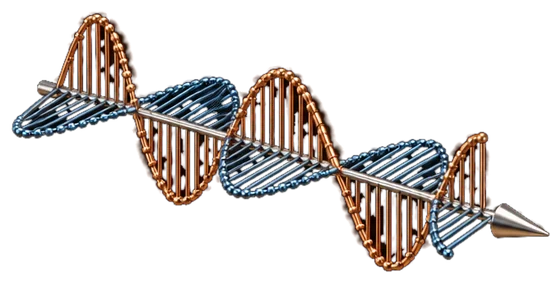
Faraday pictured electric and magnetic effects as lines of force filling the space around charges and magnets, and Maxwell turned the picture into mathematics. His paper On Physical Lines of Force, published in 1861 and 1862, is where the displacement current first appears, a term no experiment of the day required. With it the curl equations close on each other and admit a traveling wave, E and B in phase and at right angles, moving at 1/√(μ₀ε₀). Maxwell computed that speed from Weber and Kohlrausch’s electrical measurements, found it within a few percent of the speed of light, and concluded that light is electromagnetic. His 1865 paper stated the theory as twenty equations in twenty unknowns; the four compact ones everyone now recognizes are Heaviside’s reformulation of the 1880s.
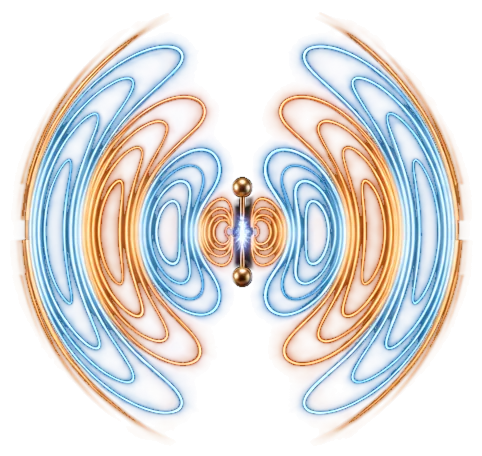
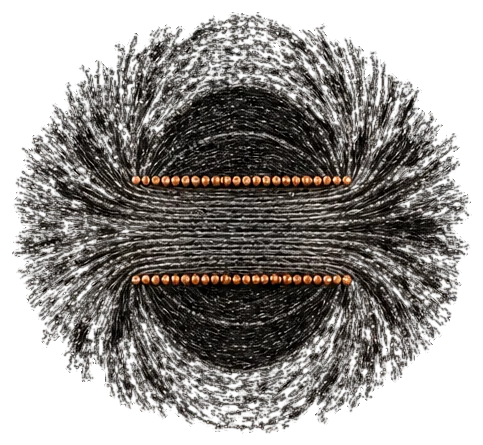
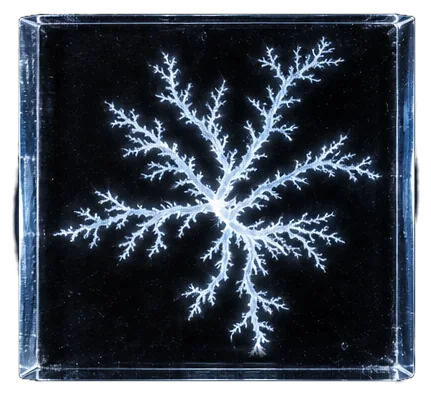
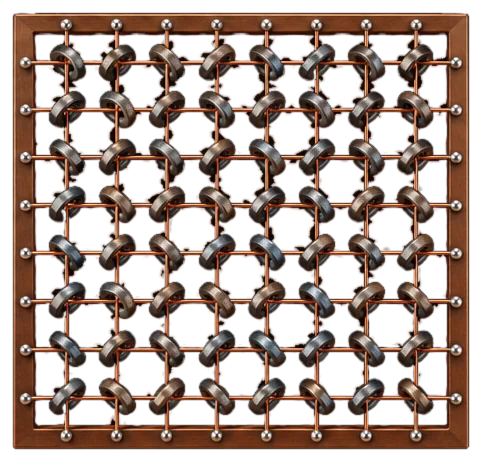
Hertz produced and detected the waves in 1887 and 1888, and in 1889 drew the field around his oscillating dipole: beyond about λ/2π the lines pinch off into closed loops and travel outward, the moment a field lets go of its source. Ampère coined the word solenoid in the 1820s, and a coil twice as long as it is wide reaches 89% of the infinite coil’s central field. Lichtenberg found his branching figures in 1777, in dust on resin struck by sparks; Niemeyer, Pietronero and Wiesmann explained the fractal in 1984. And a ferromagnet remembers. Its hysteresis loop leaves a remanence at zero field, which is exactly what core memory kept its bits in.
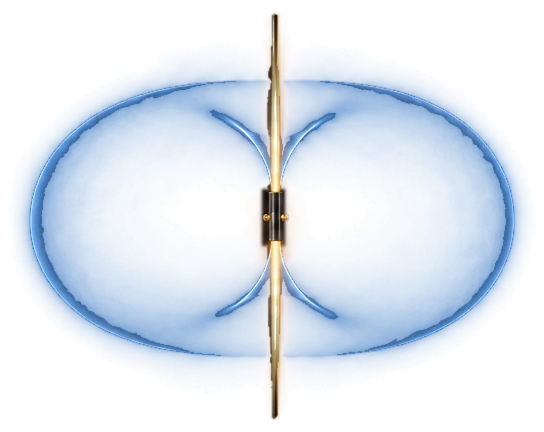
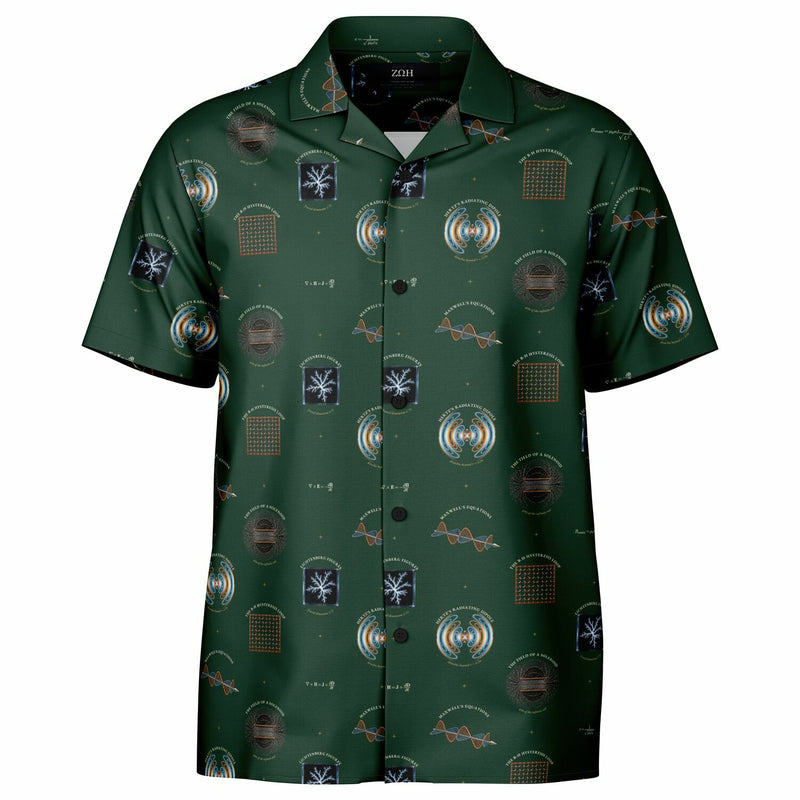
- Hertz’s Radiating DipoleA tiny spark-gap oscillator in etched glass: near it the field lines end on the rod; further out they detach as loops.
- The Field of a SolenoidIron filings on black glass threaded through a copper coil: straight and parallel inside, looping back outside like a bar magnet’s field.
- Lichtenberg FiguresAn electron-beam discharge frozen in clear acrylic: one tree from one point, thick trunks forking into ever finer tips, never rejoining.
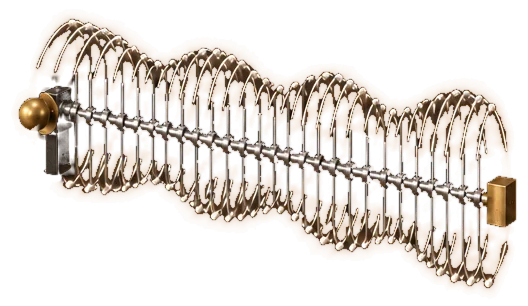
- Maxwell’s EquationsA linearly polarized wave in copper and blue anodized wire: E vertical, B horizontal, in phase, two wavelengths along the direction of travel.
- The B-H Hysteresis LoopA core-memory plane: sixty-four ferrite rings on copper wires, each holding one bit as flux left circulating after the current stops.
Leave your email and we’ll write the day it’s ready.