Digital mockup; photos of the finished piece are coming.
Stem Group Button-Up · Blueprint · Smaller print
Stem Group Button-Up · Blueprint · Smaller print
Gould’s weird wonders and an older puzzle, each placed on the tree of life by 2018.
Free U.S. shipping on every shirt.
Grand opening: the 10% is already taken off the price shown. Through 30 November.
| Inches | XS | S | M | L | XL | 2XL | 3XL | 4XL |
|---|---|---|---|---|---|---|---|---|
| Chest, flat | 20 | 21 | 22 | 23 | 24½ | 26¾ | 29 | 31¼ |
| Front length | 28½ | 29 | 29½ | 30 | 30¾ | 32 | 33 | 34 |
| Shoulder | 17¾ | 18¼ | 18¾ | 19¼ | 20 | 21⅛ | 22¼ | 23⅜ |
| Sleeve length | 8¼ | 8½ | 8¾ | 9 | 9¼ | 9⅝ | 10 | 10⅜ |
| cm | XS | S | M | L | XL | 2XL | 3XL | 4XL |
|---|---|---|---|---|---|---|---|---|
| Chest, flat | 50.8 | 53.3 | 55.9 | 58.4 | 62.2 | 67.9 | 73.7 | 79.4 |
| Front length | 72.4 | 73.7 | 74.9 | 76.2 | 78.1 | 81.3 | 83.8 | 86.4 |
| Shoulder | 45.1 | 46.4 | 47.6 | 48.9 | 50.8 | 53.7 | 56.5 | 59.4 |
| Sleeve length | 21.0 | 21.6 | 22.2 | 22.9 | 23.5 | 24.4 | 25.4 | 26.4 |
Measured with the shirt laid flat; chest is taken 1 in below the armhole, so double it for the full chest. The easiest check: lay a shirt that fits you flat and compare. Each shirt is cut and sewn by hand, so sizes can vary by up to 1 in. Stretch fabric (12% spandex).
Buying for someone? Compare a shirt they wear with this chart, or choose socks or a tie, which are one size. Or give a gift card and let them choose.
Still unsure? Ask us.
Couldn't load pickup availability
Also from Paleontology
-
The tieFossil Formal Medallion Tie · Amber Time Capsule
Regular price $36Sale price $32.40 -
The socksGilded Remains Socks · Concept Medallions · Carboniferous Night
Regular price $26Sale price $23.40


The story in the print
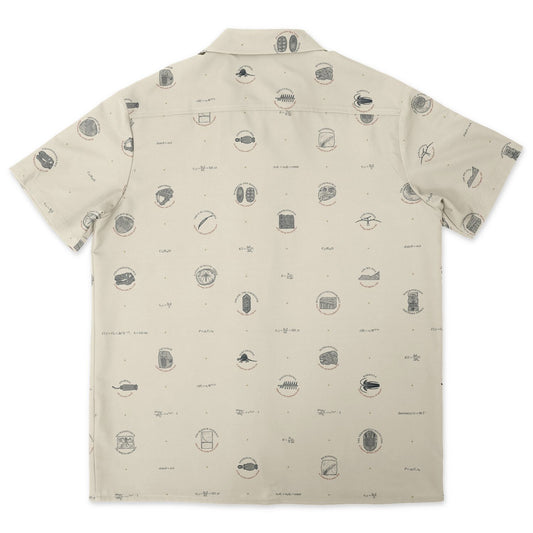
A stem group is made of the extinct relatives of a living group that split away before its living members’ last common ancestor, and the Burgess Shale is full of them. Charles Walcott found its first fossils in 1909 and opened the quarry in 1910, and Stephen Jay Gould called its strangest animals weird wonders; most are stem members of living groups. Radiodonts were found in pieces. Joseph Whiteaves described the spiny appendage of Anomalocaris in 1892 as the body of a shrimp, and in 1911 Walcott named a radiodont’s plated mouth as a jellyfish and its body as a sea cucumber, until Harry Whittington’s preparation in the early 1980s showed that such parts belonged to large swimming predators.
Opabinia has five eyes and a hose-like nozzle ending in a claw, and when Whittington showed an early reconstruction to a meeting in 1972, the room burst out laughing. Hallucigenia was reconstructed in 1977 walking on its spines, turned over in 1991, and given its head, at the other end, in 2015. Marrella, the commonest animal in the quarry, flashed iridescent color from diffraction gratings on its surface. Dickinsonia, some fifty million years older, is the odd one out: a quilted oval with no head, mouth or gut, shown to be an animal in 2018 by the animal sterols in its thin organic film.
The five images:
- Dickinsonia: Dickinsonia on the underside of an Ediacaran sandstone bed, a quilted oval trailed by three fading prints where it stopped to feed.
- Marrella: Marrella from above: two pairs of iridescent head spines sweeping back over a lacy body of twenty-six feathery segments.
- Anomalocaris: Anomalocaris from above: two spiny grasping appendages, stalked eyes, sixteen pairs of swimming flaps and a fan of tail blades.
- Opabinia: Opabinia from above: five eyes on the head, a ringed nozzle ending in a spiny claw, fifteen pairs of gill-bearing flaps.
- Hallucigenia: Hallucigenia the right way up: seven pairs of spines on its back, seven pairs of clawed legs, and a small head on a long neck.
This button-up carries STEM GROUP at the smaller print scale. Each image is explained above. It is made for people who have prospected, jacketed and prepared fossils for a living or for a grade, and for anyone who likes to know what they are wearing.
Details: 88% polyester, 12% spandex stretch fabric, spread collar, short sleeves. Printed and sewn to order.
Fabric, care and how it’s made
- Fabric: 88% polyester, 12% spandex
- Fabric weight: 3.83 oz/yd² (130 g/m²)
- Care: machine wash cold, inside out. Do not bleach. Hang to dry. Iron on low.
- Made for adults.
- Made in USA of imported fabric.
- How it’s made: I design every template and check every figure; AI image tools help render the illustrations.
What’s on it The equations, ideas and images on this design, and what they mean
More from Paleontology
-
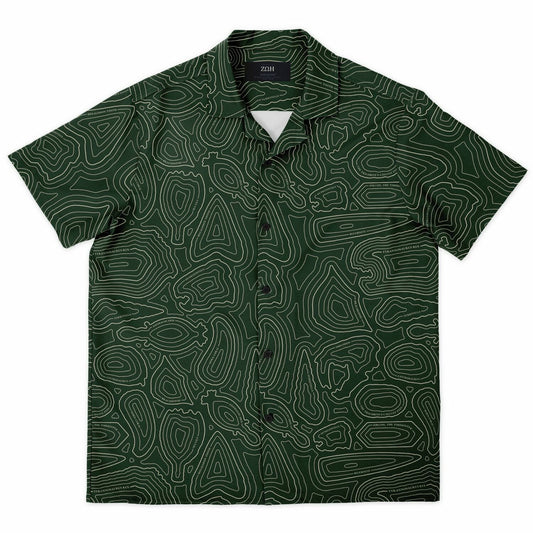
The Fossil Record Button-Up
Regular price $65Regular price$65Sale price $58.50 -
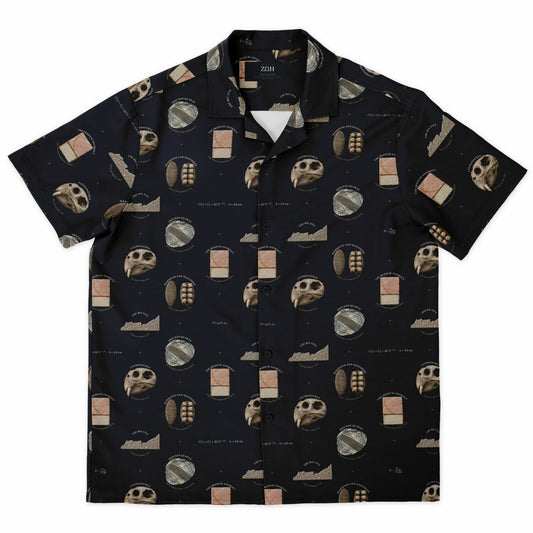
Strata Society Button-Up · Baize
Regular price $65Regular price$65Sale price $58.50 -
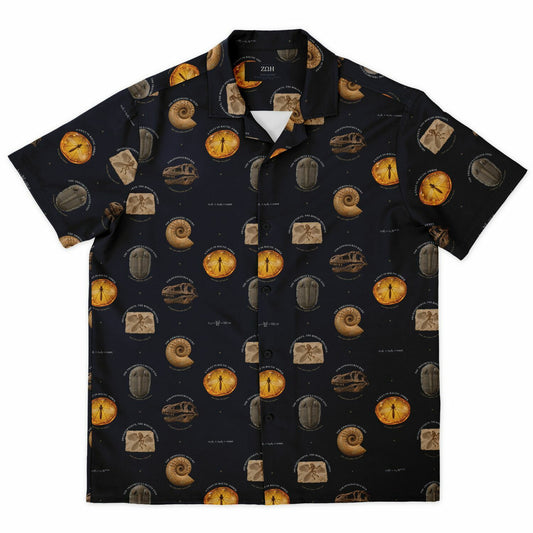
Dead Clade Walking Button-Up · Midnight
Regular price $65Regular price$65Sale price $58.50 -
Taphonomy Button-Up · Midnight
Regular price $65Regular price$65Sale price $58.50