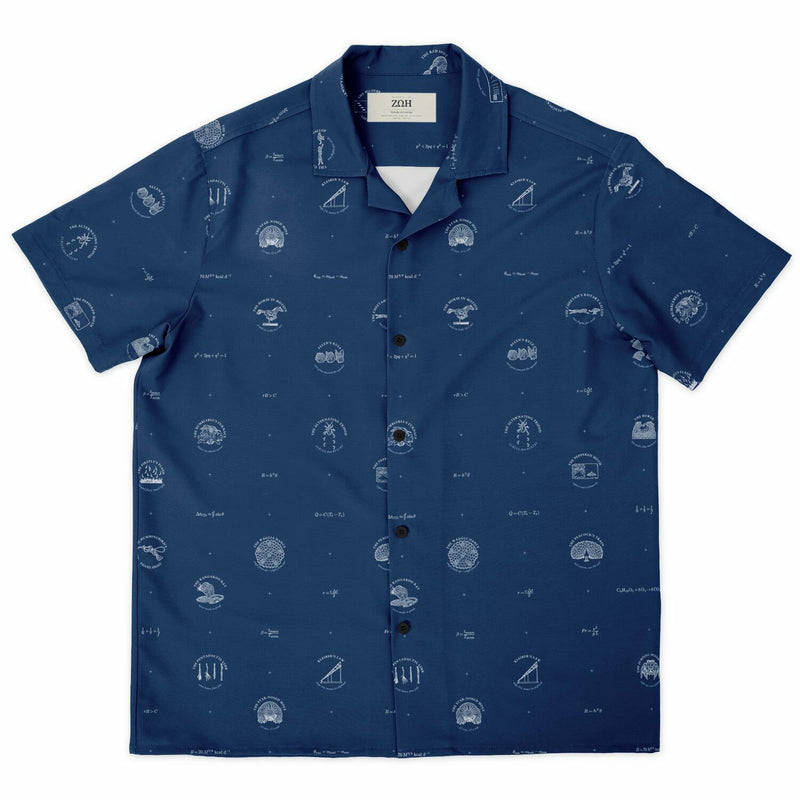
UNSUPPORTED TRANSIT
The Horse in Motion
a mile in 1:40, 16.1 m/s
Leland Stanford wanted to know whether a galloping horse ever has all four feet off the ground. On 19 June 1878 Eadweard Muybridge’s cameras caught Sallie Gardner at a mile in 1:40, 16.1 m/s: airborne once each stride, with her legs gathered under her, not stretched out as painters had shown for centuries.
UNSUPPORTED TRANSIT
The Hummingbird’s Figure-Eight
2005: down 75 %, up 25 %
Hummingbirds are the only birds that can hover for long in still air. They hold the body upright, sweep the wings forward and back, and turn each wing over so it lifts on the backstroke. In 2005 Warrick, Tobalske and Powers found the downstroke carries 75% of the weight and the upstroke 25%. The path shown is a model.
UNSUPPORTED TRANSIT
The Alternating Tripod
L1 R2 L3, then R1 L2 R3
At speed most insects move their legs in two sets of three: the front and hind legs of one side with the middle leg of the other. One tripod swings while the other stands, and the standing triangle always encloses the center of mass, so the insect never has to balance. It became the first gait of walking robots.
UNSUPPORTED TRANSIT
The Cheetah’s Rotary Gallop
two flights per stride
A horse at full gallop is airborne once per stride. Milton Hildebrand’s 1959 film showed a cheetah airborne twice: once extended, legs stretched fore and aft, and once gathered, spine arched and hind feet swinging past the forefeet. The bending spine works as a spring and lengthens every stride; speed is stride frequency times stride length.
UNSUPPORTED TRANSIT
The Hildebrand Gait Diagram
LH, RH, LF, RF, then air
Milton Hildebrand turned films of animals into bar diagrams: one row per foot, a bar for each spell on the ground. A horse galloping on the right lead strikes left hind, right hind, left fore, right fore, and when the right fore lifts, nothing is down. The timing here is a model, each foot down a quarter of the stride.
UMWELT
The Star-Nosed Mole
22 rays, 11 a side
The star-nosed mole forages nearly blind in wetland mud, and its star is an organ of touch, not smell: twenty-two fleshy rays, eleven a side, packed with Eimer’s organs. Kenneth Catania showed that when a larger ray meets something interesting, the mole shifts the star to touch it with the short eleventh pair: a fovea for touch.
UMWELT
The Barn Owl’s Facial Disc
ears set at different heights
In 1971 Roger Payne showed that a barn owl in a light-tight room could strike a mouse by its rustle alone. The facial disc collects the sound for two ears set at different heights: timing between the ears gives the bearing, loudness the elevation. Knudsen and Konishi found the owl’s midbrain map of auditory space in 1978.
UMWELT
The Jumping Spider’s Eyes
eight eyes, two telephoto
Most spiders hunt by touch; jumping spiders hunt by sight. Six of their eight eyes watch for movement. The two big principal eyes are telephoto systems, a lens at the front of a long tube and a small retina that muscles swing to scan a target, as Michael Land described in 1969. The spider turns, studies, then jumps.
UMWELT
The Feeding Buzz
search, approach, buzz
In the 1790s Spallanzani and Jurine found that blinded bats hunted normally but bats with plugged ears could not. Donald Griffin heard why in 1938 and named it echolocation in 1944. An echo’s delay gives range, 5.8 ms a meter, and in the terminal buzz calls come at up to about 200 a second. This hunt is a model.
UMWELT
The Chameleon’s Strike
ranges its prey by focus
Each eye turns on its own until one finds an insect; then both swing forward. To judge distance a chameleon uses focus, not the difference between its eyes: fitted with spectacle lenses in 1977, it struck short or long as the lenses predicted. Its tongue is a projectile, flung by elastic sheaths a muscle loads and suddenly releases.
ENDLESS FORMS
Darwin’s Finches
four beaks, one ancestor
Darwin collected finches in the Galápagos in 1835 without labeling most by island; John Gould recognized them as closely related species. In 1845 Darwin printed four heads and wrote that one species might have been modified for different ends. After the 1977 drought on Daphne Major, Peter and Rosemary Grant measured deeper beaks in the survivors’ offspring.
ENDLESS FORMS
The Four-Winged Fly
halteres turned into wings
Flies have one pair of wings; the hind wings are reduced to halteres, club-shaped gyroscopes. In 1978 Edward Lewis described flies carrying three bithorax mutations, whose third thoracic segment copies the second: four full wings, no halteres. The gene is Ultrabithorax, one of eight Hox genes lying along the chromosome in body order.
ENDLESS FORMS
The Axolotl
three gill stalks a side
The axolotl of Xochimilco reaches sexual maturity without metamorphosing, keeping its larval gills, three feathery stalks a side, and its finned tail. In the 1860s some offspring of axolotls bred in Paris turned into land salamanders, and thyroid hormone was later shown to trigger the change. It can regrow a lost limb, and in 2019 the IUCN assessed it as critically endangered in the wild.
ENDLESS FORMS
The Pentadactyl Limb
same bones, four jobs
Richard Owen defined a homolog in 1843 as the same organ in different animals under every variety of form and function. The forelimb is the classic case: one upper-arm bone, two in the forearm, a wrist, then palm and fingers. A bat stretches four fingers into a wing; a horse stands on its third digit alone.
ENDLESS FORMS
The Peppered Moth
typica and carbonaria
The pale typica matches lichen-covered bark. The black carbonaria, first recorded at Manchester in 1848, rose to almost the whole population of the industrial north within fifty years. Kettlewell’s release-recapture experiments in the 1950s tied it to birds, and after the Clean Air Acts it fell back toward rarity. The mutation was traced in 2016.
SIGN STIMULUS
The Waggle Dance
angle from up = angle from sun
Karl von Frisch decoded it and shared the 1973 Nobel Prize. A forager runs straight across the vertical comb, waggling, then circles back and runs again. The run’s angle from straight up is the food’s bearing from the sun: here 40° right. The run lasts longer the farther the food, and dancers correct for the moving sun.
SIGN STIMULUS
The Red Spot
red spot, lower mandible
A herring gull chick pecks at its parent’s bill, and the parent regurgitates food. In 1950 Tinbergen and Perdeck offered chicks cardboard heads: shape hardly mattered, but the red spot near the tip of the lower mandible did. A thin red rod with white bands beat a lifelike head: a supernormal stimulus.
SIGN STIMULUS
The Firefly’s Flash
J-shaped flash, timed reply
A male Photinus pyralis flashes as he dips and climbs, drawing a J of yellow-green light, and a female answers after a fixed delay. The light is luciferin oxidized by luciferase, powered by ATP, peaking near 560 nm. In 1965 James Lloyd showed that Photuris females fake the reply, lure the males in and eat them.
SIGN STIMULUS
The Bower
two walls, blue treasures
A male satin bowerbird builds no nest. He builds a bower, two walls of sticks forming an avenue, paints the inner walls with chewed plant pulp and covers his court with blue things: feathers, flowers, berries, plastic. Females visit several bowers and mate at one, then raise the young alone. Sexual selection, on something he makes.
SIGN STIMULUS
The Peacock’s Train
tail coverts, not the tail
The peacock’s train is not its tail: it is elongated upper tail coverts, propped up by the true tail. None of its blue or green is pigment. The barbules hold a lattice of melanin rods in keratin whose spacing picks the color, mapped by Jian Zi’s group in 2003. The sight of one feather made Darwin sick in 1860.
THE FIRE OF LIFE
The Bumblebee’s Furnace
shivers its thorax warm
Insects are supposed to be cold-blooded, but a bumblebee cannot take off until its flight muscles are near 30 °C. On a cold morning it shivers them, the two sets working against each other with the wings uncoupled, so all the energy becomes heat. Bernd Heinrich’s Bumblebee Economics, in 1979, worked out the budget.
THE FIRE OF LIFE
The Kangaroo Rat
never needs to drink
Knut and Bodil Schmidt-Nielsen kept Merriam’s kangaroo rats on dry grain around 1950; they neither drank nor lost weight. Burning a gram of starch yields 0.556 g of water, a gram of fat about 1.1, and the rat spends almost none: concentrated urine, dry feces, and a nose that recovers water from each breath.
THE FIRE OF LIFE
The One-Way Lung
air through the lung one way
A mammal breathes in and out through the same tubes and always holds some stale air. A bird’s small, rigid lungs are ventilated by air sacs, nine in most species, and one parcel of air takes two breaths to pass through: rear sacs, lungs, front sacs, out. Through the lungs it flows back to front on both strokes.
THE FIRE OF LIFE
Kleiber’s Law
slope 3/4, mouse to elephant
In 1932 Max Kleiber found resting metabolic rates climbing with body mass to the three-quarters power, steeper than the two-thirds Rubner expected from surface area. Seventy kilocalories a day times mass in kilograms to the 3/4 gives 3.7 for a 20 g mouse and 35,000 for a 4-metric-ton elephant. Why three-quarters is still argued over.
THE FIRE OF LIFE
Allen’s Rule
ears grow toward the equator
In 1877 Joel Asaph Allen noted that warm-blooded animals from cold climates have shorter ears, limbs and tails. An appendage is a radiator. The arctic fox’s short, furred ears lose little heat, and Scholander found in 1950 that it need not raise its metabolism until about −40 °C. The fennec has the largest ears for its size of any canid.